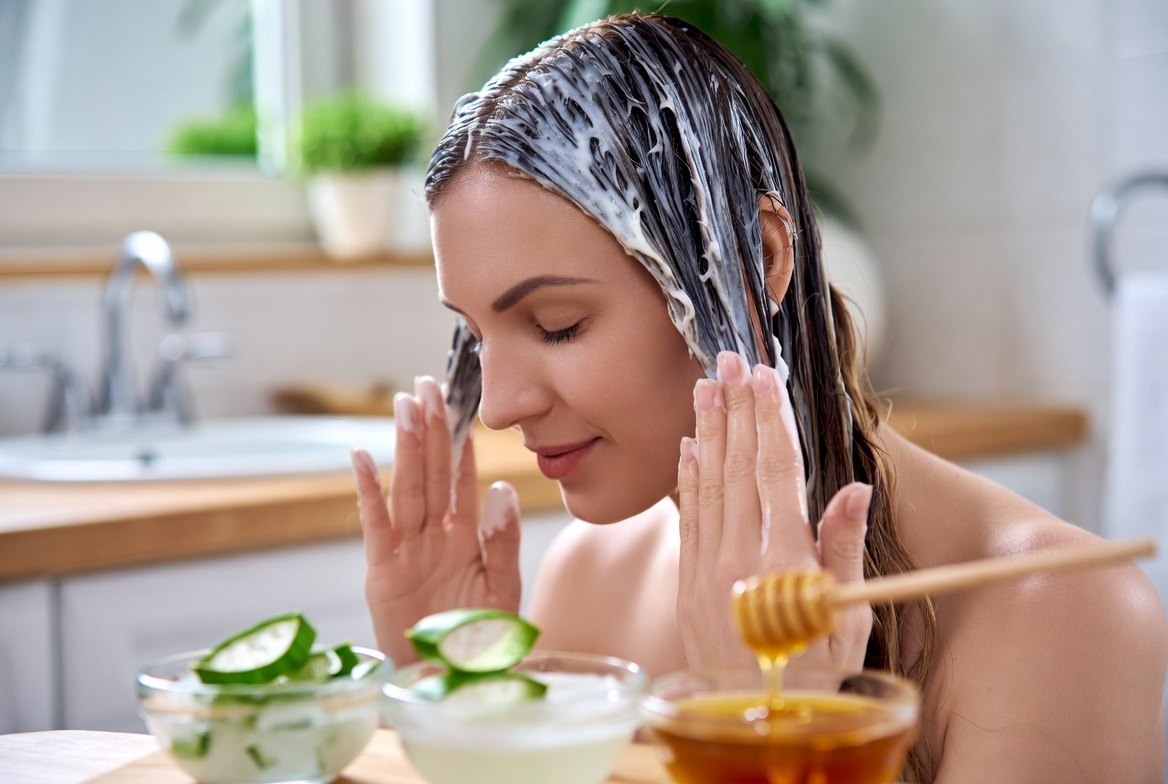
Healthy hair starts with consistent care, smart ingredient choices, and a routine that supports your scalp instead of stripping it. A DIY Sulphate-Free Hair Routine gives you full control over what touches your hair and scalp while helping maintain moisture, strength, and long-term hair resilience. Many people are moving toward cleaner hair care because traditional shampoos often contain aggressive surfactants that remove natural oils along with dirt and buildup. When you switch to gentler cleansing methods and natural conditioning treatments, hair texture improves, scalp irritation reduces, and shine returns naturally.
Natural hair care is not about trends or aesthetics. It is about restoring balance to the scalp barrier, protecting keratin protein structure, and supporting the microbiome that exists on your scalp. Once you understand how hair and scalp biology works, building a natural routine becomes simple and effective.
If you prefer ready-made options, explore our complete guide to the best sulphate-free shampoos for different hair types and scalp needs.
Understanding Hair and Scalp Science Before Starting
Hair health depends on three major factors: scalp environment, moisture balance, and protein strength. The scalp produces sebum, a natural oil that protects hair shafts and prevents dryness. Harsh cleansing agents often disrupt this protective layer, causing the scalp to overproduce oil or become dry and irritated.
Hair porosity also plays a major role in how your hair responds to treatments. Low porosity hair resists moisture penetration and works best with lightweight hydration. High porosity hair loses moisture quickly and needs stronger sealing ingredients like natural butters and thicker oils. Protein structure is equally important because hair is primarily made of keratin. Damage from chemicals, heat styling, and pollution weakens this structure over time.
When you build routines using natural cleansers, plant oils, and moisture-supporting ingredients, you protect the scalp barrier and maintain microbiome balance. This directly affects hair growth cycles and strand strength.
DIY Sulphate-Free Hair Routine Step-by-Step Natural Method
A proper DIY Sulphate-Free Hair Routine follows a sequence that protects moisture levels while still cleansing effectively. Skipping steps or mixing too many ingredients often leads to buildup or dryness.
The first step should always focus on pre-wash protection. Applying natural oil before cleansing creates a protective layer that prevents moisture loss during washing. Coconut oil reduces protein loss, while castor oil supports scalp circulation. When massaged into the scalp, these oils stimulate blood flow to hair follicles and help distribute natural sebum evenly.
The cleansing stage should focus on gentle surfactants from natural sources. Ingredients like soapnut extract, aloe vera, or fermented rice water remove dirt without stripping protective oils. Gentle surfactants help maintain scalp microbiome balance and reduce irritation caused by synthetic detergents.
Conditioning is where moisture retention and cuticle repair happens. Natural conditioners made from yogurt, aloe vera gel, or plant oils help smooth the hair cuticle and reduce friction between strands. This directly lowers breakage and frizz.
The final step focuses on sealing hydration. Natural leave-in sprays made with rose water or plant glycerin help lock moisture into the hair shaft without creating heavy buildup.
Choosing Ingredients That Support Long-Term Hair Strength
The effectiveness of natural routines depends on selecting ingredients that support scalp biology instead of masking damage temporarily.
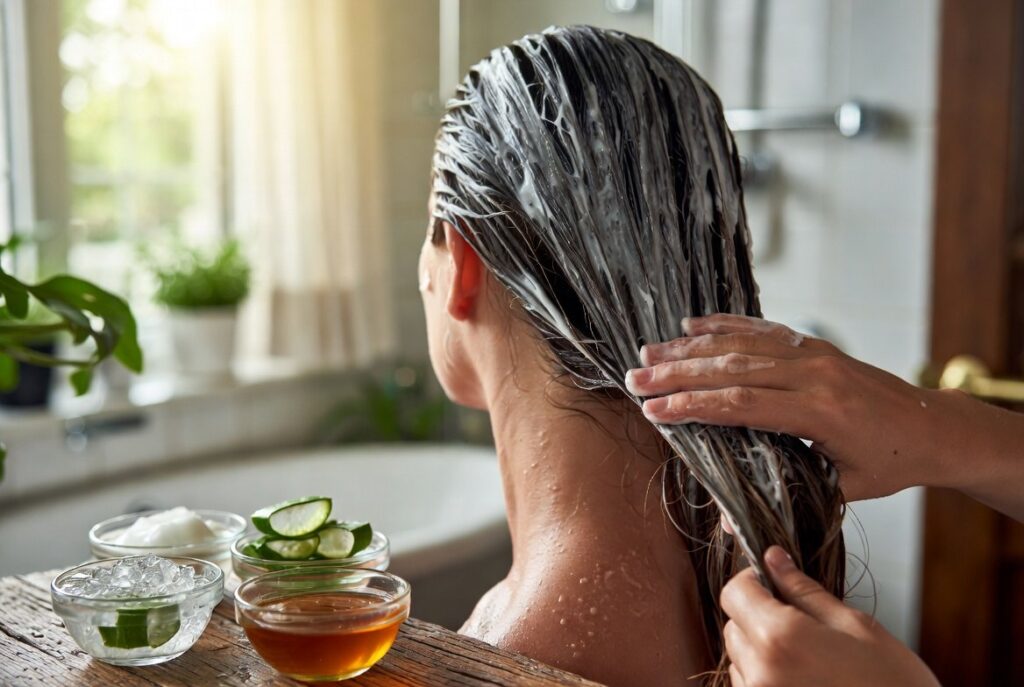
Aloe vera supports scalp barrier protection and hydration. Its natural enzymes help remove dead skin buildup while maintaining pH balance. Coconut oil penetrates the hair shaft and reduces protein loss during washing. Honey acts as a natural humectant and attracts moisture from the environment into hair strands.
Fermented rice water contains amino acids that strengthen hair structure and improve elasticity. Apple cider vinegar, when diluted properly, helps restore scalp pH and smooth the hair cuticle, increasing light reflection and shine.
Natural clays can also be used occasionally to remove buildup from styling products or environmental pollution. These minerals bind to toxins and remove residue without disrupting natural oil production.
Transition Phase and What to Expect
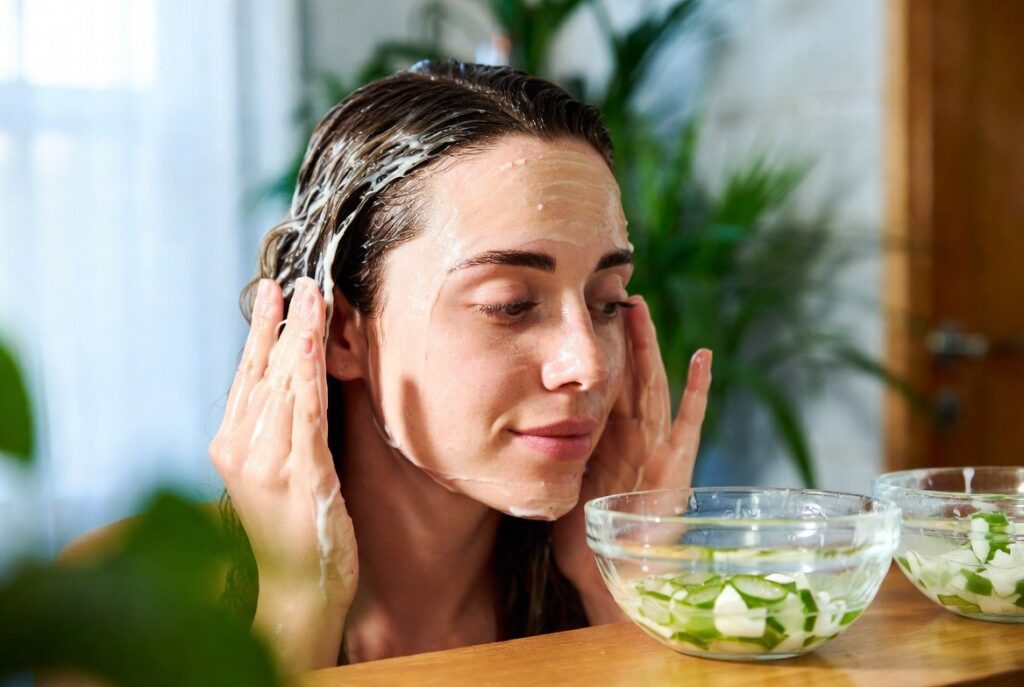
Switching from chemical-based products to natural routines requires an adjustment period. The scalp needs time to rebalance sebum production. During this time, hair might feel heavier or slightly different in texture. This is not damage. It is the scalp returning to its natural rhythm.
Most people notice reduced frizz and improved softness after three to four weeks. Hair becomes easier to manage because the cuticle layer stays smoother when natural oils are preserved. Scalp itching often decreases once harsh surfactants are removed from regular use.
Consistency determines results. Changing routines too frequently prevents the scalp from stabilizing oil production and microbiome balance.
Scalp Microbiome and Why It Matters
The scalp hosts beneficial bacteria that help protect against irritation, dandruff, and inflammation. Over-cleansing destroys this balance and weakens the scalp barrier. When natural cleansing agents are used, these beneficial microorganisms stay active and support scalp health.
A balanced microbiome reduces inflammation signals that trigger excessive oil production or dryness. This balance supports healthier follicle function and can reduce breakage linked to weak hair growth cycles.
Maintaining microbiome stability is one of the strongest long-term benefits of natural hair routines.
Moisture and Protein Balance Strategy
Hair requires both hydration and protein reinforcement. Too much moisture without protein weakens strands, while excess protein without hydration makes hair brittle.
Natural routines should alternate between moisture-rich masks and protein-support treatments. Ingredients like yogurt and rice water provide mild protein strengthening without causing stiffness. Plant oils and aloe-based masks provide hydration and elasticity support.
Balancing these elements ensures hair remains flexible, strong, and resistant to breakage.
Who Benefits Most From Natural Sulphate-Free Hair Care
People with color-treated hair experience slower color fading when harsh detergents are removed. Curly and textured hair types benefit because natural oils stay intact, improving curl pattern definition. Individuals with sensitive scalps experience reduced irritation because gentle surfactants protect the scalp barrier.
Keratin-treated hair also benefits because natural cleansing methods preserve protein structure and treatment longevity. Those living in polluted urban environments gain protection because natural oils create a barrier against environmental stressors.
Long-Term Results of Consistent Natural Hair Care
When followed consistently, natural routines improve hair thickness appearance, shine quality, and strand flexibility. The scalp produces balanced oil levels instead of extreme dryness or excessive greasiness. Hair becomes easier to detangle because the cuticle layer remains smoother.
Damage from heat styling or environmental stress becomes easier to repair because the scalp environment supports stronger hair growth cycles. Over time, hair breakage reduces, and overall texture improves.
Common Mistakes That Slow Results
Using too many natural ingredients at once creates buildup and makes hair feel heavy. Overwashing disrupts natural oil balance even when using gentle cleansers. Skipping conditioning weakens cuticle protection and increases frizz.
Another common mistake is expecting immediate results. Natural routines work by restoring biological balance, which requires consistency.
Maintaining Results for Years
Once your hair and scalp adjust, maintaining results becomes simple. Washing two to three times per week supports natural oil balance. Weekly moisture masks maintain elasticity. Monthly clarifying using mild natural acids removes environmental buildup without damaging scalp microbiome stability.
Hair care should be treated as long-term maintenance, not quick repair.
Final Thoughts
Building a natural hair care system requires patience, but the results justify the effort. A properly structured DIY Sulphate-Free Hair Routine strengthens hair from root to tip while protecting scalp health and microbiome balance. When you choose natural cleansing methods, protein-support ingredients, and moisture-sealing treatments, you create an environment where hair can grow stronger and healthier naturally. Staying consistent with a DIY Sulphate-Free Hair Routine ensures long-term scalp stability, reduced damage, and stronger hair quality that improves month after month.